Contact
Address
14007 Galliano Court
Rancho Cucamonga, CA 91739
Michael Mucino | CA DRE# 01374697
Lisa Mucino | CA DRE# 01976041
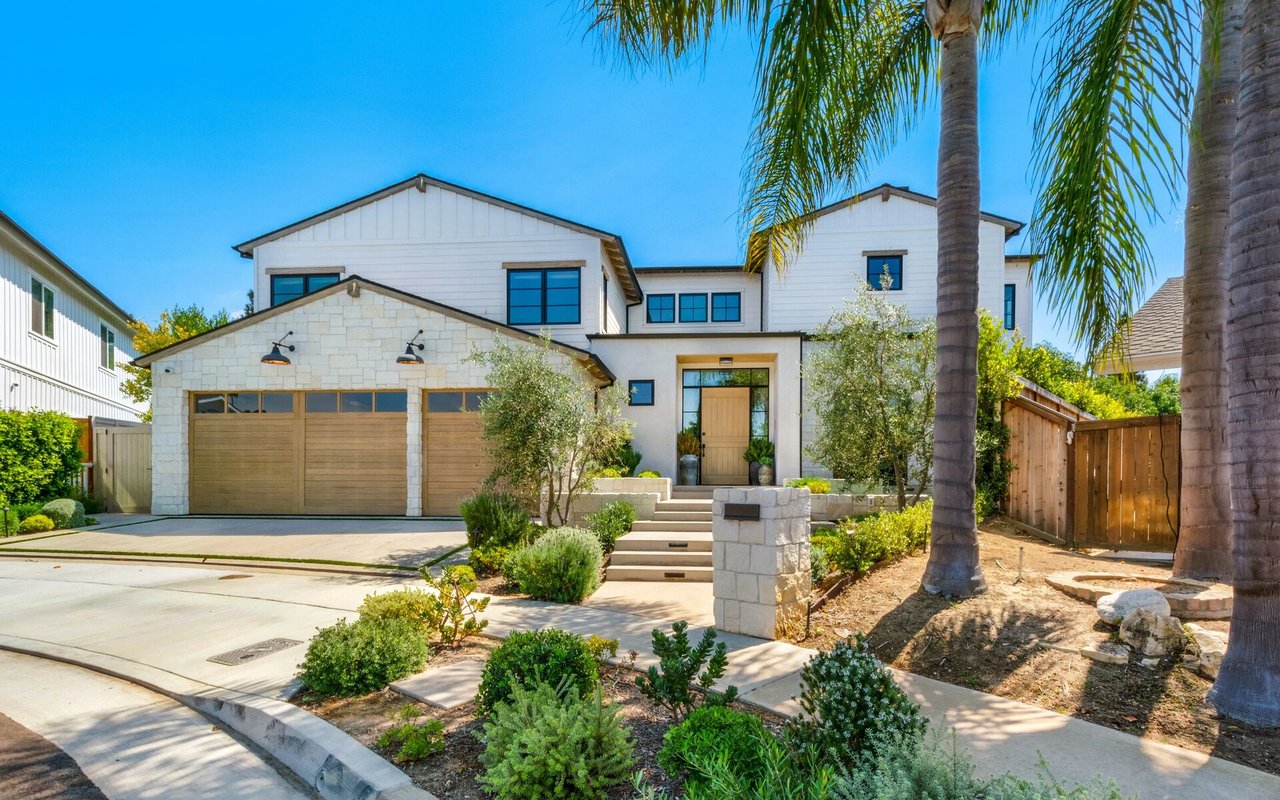
82,419 people live in Upland, where the median age is 38.5 and the average individual income is $46,095. Data provided by the U.S. Census Bureau.
Total Population
Median Age
Population Density
Average individual Income
Upland sits at the western edge of San Bernardino County, pressed up against the base of the San Gabriel Mountains, and it has spent more than a century earning its nickname: the "City of Gracious Living." What that means in practice is something you feel driving up Euclid Avenue for the first time — a broad, tree-shaded boulevard with a landscaped center median that once carried a mule-drawn streetcar, laid out in the 1880s by the Chaffey brothers and still the spine of the city today.
I show homes across the Inland Empire, and Upland is the city buyers keep circling back to when they want three things at once: mature neighborhoods with real architectural character, mountain access measured in minutes rather than hours, and a commute that still works. You get a walkable historic downtown with a Metrolink station at the end of it, foothill estates with unobstructed views of Mount Baldy, and quiet mid-century streets in between — all within about fifteen square miles.
Upland is not a master-planned city. That is the single most important thing to understand about it. Neighborhoods here were built in layers across 120 years, and where you buy determines almost everything about your experience — your lot size, your tax bill, your architectural style, and whether you have an HOA at all.
Upland's pricing follows a clear north-to-south gradient. The closer you get to the foothills, the higher the price per square foot and the larger the lot. Move south toward the I-10 corridor and you find the city's entry-level inventory — often the most charming homes, just smaller and older.
Market Segment | Typical Range | What You Get |
|---|---|---|
North Upland / Foothills | $1.1M – $1.8M+ | Custom estates, half-acre-plus lots, panoramic mountain views |
Central Upland | $750K – $1.05M | Mid-century single-family homes, established streets, wide setbacks |
Historic Downtown & South | $600K – $800K | Craftsman cottages, character homes, entry-level single-family |
Condos & Townhomes | $450K – $650K | Low-maintenance living, central and southern corridors |
Three market realities I'd want any buyer to know before writing an offer here. First, inventory of well-maintained single-family homes stays tight across every price tier, which means clean, updated properties still draw competition even in slower months. Second, the price gradient is steep enough that a ten-minute drive south can save you $250,000 — worth understanding before you narrow your search. Third, Upland benefits enormously from sitting directly east of Claremont: you get comparable foothill proximity and access to the Claremont Colleges' dining and culture without paying Claremont's premium per square foot.
San Antonio Heights is the city's prestige address, though technically it sits in unincorporated San Bernardino County under ZIP 91784. Homes here are almost entirely custom builds on half-acre-plus lots, with an eclectic mix of Spanish Colonial, Italianate, and contemporary architecture accumulated from the 1940s forward. There are no formal HOAs, streets are quiet and winding, and the elevation delivers views across the entire basin. Buyers who want privacy and an equestrian-adjacent feel end up here.
Historic North Upland runs north of downtown toward Foothill Boulevard and holds the city's densest concentration of preserved early-20th-century architecture. Tree canopies are mature, streets are walkable, and Euclid Avenue's greenbelt anchors the whole district. This is where buyers who genuinely care about original woodwork, front porches, and neighborhood history should start.
The Colonies at San Antonio is Upland's mid-2000s master-planned community in the north end of the city — large executive homes, attached row houses, walking trails along preserved open space, and The Colonies Crossroads shopping center essentially next door. Spanish Mediterranean and Tuscan styling dominate. It is the most conventionally suburban, family-oriented option in Upland, and the trade-off is Mello-Roos.
Sycamore Hills is the newest of the four — contemporary detached homes and townhomes built from the 2010s onward, with resort-style shared amenities including pools, parks, and a clubhouse. Modern farmhouse and transitional exteriors, energy-efficient construction, and low-maintenance lots. This is the neighborhood I recommend to buyers who have no interest in maintaining a 1925 roof.
Neighborhood | Era | Styles | Feel |
|---|---|---|---|
San Antonio Heights | 1940s–present (custom) | Spanish Colonial, Italianate, custom modern | Secluded, scenic, spacious |
Historic North Upland | 1900s–1950s | Craftsman, Spanish Revival, Tudor, ranch | Historic, shaded, established |
The Colonies | 2000s–2010s | Spanish Mediterranean, Tuscan | Suburban, master-planned |
Sycamore Hills | 2010s–present | Modern farmhouse, transitional | Amenity-rich, low-maintenance |
Upland's housing stock reads almost like a timeline of Southern California residential design, and you can trace it geographically.
The Craftsman bungalows concentrated in Downtown and Historic North Upland date to roughly 1900–1930 and show the classic markers: broad low-pitched rooflines, exposed rafter tails, deep front porches on tapered stone or brick piers, and interior woodwork that simply is not reproduced at this price point anymore. Spanish Colonial Revival followed through the 1920s and 40s — white stucco, red clay tile, wrought iron, arched entries — and remains prevalent across central Upland while continuing to influence new construction in the north.
The postwar expansion brought mid-century ranches to Upland's mid-town neighborhoods: single-story, sprawling floor plans, low rooflines, attached garages, and the deep backyards that make these homes so appealing to families today. Finally, the foothill estates and custom builds along San Antonio Heights and upper North Upland range from gated Mediterranean compounds to sharply contemporary homes with multi-car garages, pools, and mountain vistas.
One practical note from experience: original Craftsman and Spanish Revival homes here frequently have knob-and-tube wiring, galvanized plumbing, or original foundations. That is not a reason to avoid them — it is a reason to budget for a thorough inspection and negotiate accordingly.
Upland uses a split district model that surprises a lot of relocating buyers. Kindergarten through eighth grade falls under Upland Unified School District, while high school is handled regionally by the Chaffey Joint Union High School District.
At the elementary level, families gravitate toward Foothill Knolls STEM Academy and Baldy View Elementary, which runs a dual-language immersion program, alongside Valencia and Citrus Elementary. Pioneer Junior High and Upland Junior High cover seventh and eighth grades with honors, music, and athletic programming. Upland High School is the flagship campus, though families in certain northern boundary areas zone to Los Osos High School or Alta Loma High School in neighboring Rancho Cucamonga.
Because boundaries shift and North Upland zoning can be genuinely counterintuitive, I always verify school assignment at the specific address before a client falls in love with a house. Private options in the area include Western Christian School and St. Mark's Episcopal School.
Second Avenue is the reason downtown Upland works. It is a tree-lined main street of mid-century brick storefronts occupied by vintage boutiques, antique dealers, independent restaurants, craft breweries, specialty coffee roasters, and local bakeries — not a manufactured "downtown experience," but a functioning one that survived and got reinvested in.
The Upland Metrolink station sits at the south end of the street, which means residents in nearby historic homes can genuinely walk to train service. Community life centers on a handful of recurring events: 2nd on 2nd, held the second Saturday of each month with live music, outdoor dining, and artisan vendors; the weekly Upland Farmers Market; and the annual Lemon Festival, the city's signature event and a nod to the citrus agriculture that built it.
Upland transitions from neighborhood parkland to genuine alpine terrain faster than almost any city in the region.
The Pacific Electric Trail is the everyday workhorse — a 21-mile paved rail-trail built on the former Pacific Electric Railway corridor, running east-west straight through the city with pedestrian access from downtown. It is flat, fully accessible, and used constantly for cycling, running, and dog walking. Colonies Park in North Upland offers sports fields, modern playgrounds, and walking paths against a foothill backdrop, while Memorial Park serves as the central civic hub with baseball fields, tennis courts, a skate park, picnic pavilions, and the Upland YMCA.
Then there is Mount Baldy, minutes north via Mount Baldy Road through San Antonio Canyon. Icehouse Canyon Trail and the Mt. Baldy summit route draw serious hikers, the resort runs scenic chairlift rides and alpine dining in warm months, and winter brings skiing and snowboarding. Very few Southern California cities let you leave your driveway and be at a trailhead in twenty minutes.
Upland's retail splits cleanly along its two freeway corridors.
The Colonies Crossroads, just off the 210 in North Upland, is the region's open-air lifestyle power center. Anchors include Target, Kohl's, Nordstrom Rack, Home Depot, Dick's Sporting Goods, TJ Maxx, and BevMo!, with dining that ranges from fast-casual staples to local favorites like The Back Abbey, known for Belgian beer and gourmet burgers, and The Heights Restaurant.
Mountain Green Shopping Center, on Mountain Avenue near the I-10, handles daily errands — ALDI, CVS, and Michaels, plus quick-service spots including Dunkin', Jamba Juice, Jersey Mike's, and Handel's Homemade Ice Cream. For anything with more personality, downtown's Second Avenue remains the better dinner reservation.
Upland's transportation position is one of its strongest selling points, and it gives commuters real options rather than a single dependency.
The Metrolink San Bernardino Line runs west from the downtown Upland station to Los Angeles Union Station and east to San Bernardino, which makes a downtown-adjacent home a legitimate transit play. Interstate 10 borders the city to the south, connecting to Los Angeles westbound and San Bernardino, Redlands, and the desert eastbound. The 210 Freeway crosses the northern portion of the city, heading west toward Pasadena and the San Fernando Valley. And the I-15 corridor is a short drive east on either freeway, opening routes north toward the High Desert and Las Vegas or south into Riverside and San Diego counties.
Euclid Avenue itself is the city's defining landmark — a Chaffey-era boulevard that has held its form for more than a century. At its intersection with Foothill Boulevard stands the Madonna of the Trail, an 18-foot monument dedicated in 1929 and one of twelve identical statues placed nationwide by the National Society Daughters of the American Revolution to honor the pioneer women who traveled west.
The Cooper Regional History Museum occupies the 1937 Art Deco W.T. Grant building downtown and preserves the heritage of the West Inland Empire — the citrus industry that shaped the local economy, local Native American history, early settlement, and the city's municipal development. It is worth an hour for anyone seriously considering a historic home here; understanding why these neighborhoods were built the way they were changes how you evaluate them.
Upland's cost of living runs above the national average, as any Southern California foothill city does, but it stays competitive against Los Angeles County. Utility costs spike in summer — air conditioning is not optional here — while fuel and groceries track San Bernardino County averages.
On property taxes, Proposition 13 sets the base rate at 1% of assessed value. Once you add voter-approved school and infrastructure bonds, Upland's typical effective rate lands between roughly 1.1% and 1.25%.
Mello-Roos is where buyers get caught. Homes built before about 1990 — which covers most of Historic North Upland, Downtown, and central Upland — generally carry no Mello-Roos assessment at all. Newer master-planned communities including The Colonies and Sycamore Hills do, and those Community Facilities District assessments fund local infrastructure, parks, and roads. They can push an effective rate to 1.3%–1.8%, adding anywhere from $2,000 to $5,000 or more annually depending on the specific lot.
That difference is large enough to change which neighborhood you can afford. Two homes at identical purchase prices in different parts of Upland can have annual carrying costs that differ by hundreds of dollars a month. I run the actual tax bill on every property before my clients commit, and I'd recommend any buyer do the same.
Upland occupies a specific middle ground along the foothill corridor, and buyers choose it over its neighbors for reasons that are usually quite concrete.
Over Claremont, to the west: Claremont's proximity to the Claremont Colleges drives premium pricing and a heavier tax burden, and its historic preservation standards are strict. Upland offers equal foothill access with larger homes, bigger lots, and meaningfully lower cost per square foot — plus far more freedom in architectural style and renovation.
Over Rancho Cucamonga, to the east: Rancho Cucamonga is built primarily around large modern tracts, which brings higher HOA dues and widespread Mello-Roos. Buyers who want mature tree canopies, older character homes, and neighborhoods without community design guidelines generally prefer Upland.
Over Ontario, to the south: Ontario is a commercial, logistics, and transit hub anchored by Ontario International Airport. Upland trades that economic density for a strictly residential foothill setting — mountain views, quieter streets, and far less industrial traffic.
The common thread is that Upland gives you established character and geographic advantage without the premium that either extreme of the corridor charges.
If Upland is on your list, the difference between a good purchase and a great one here comes down to details that don't show up on a listing photo — which side of a school boundary you land on, whether a home carries a Mello-Roos assessment, and what a 1920s foundation will actually cost you. That's the kind of guidance we bring to every client.
Michael Mucino is the Broker and Owner of Camden McKay Realty, with more than two decades of experience across traditional sales, investment properties, and market valuations throughout Southern California and the Inland Empire (CA DRE# 01374697). Lisa Mucino, licensed since 2015, is a Realtor® with the brokerage and works closely with first-time buyers, growing families, and seasoned sellers (CA DRE# 01976041). As a husband-and-wife team based in Rancho Cucamonga, they know this stretch of the foothill corridor street by street — including where Upland's value genuinely sits.
Whether you're buying your first home, moving up to a foothill estate, or preparing to list, reach out for a straightforward conversation about your options.
Camden McKay Realty
14007 Galliano Court, Rancho Cucamonga, CA 91739
Phone: (442) 305-7457
Email: [email protected]
There's plenty to do around Upland, including shopping, dining, nightlife, parks, and more. Data provided by Walk Score and Yelp.
Explore popular things to do in the area, including Tilly's, McCarthy Park, and David Kangs Tae Kwon Do.
| Name | Category | Distance | Reviews |
Ratings by
Yelp
|
|---|---|---|---|---|
| Shopping | 1.01 miles | 1 review | 1/5 stars | |
| Active | 0.96 miles | 18 reviews | 4.7/5 stars | |
| Active | 1.07 miles | 0 reviews | 0/5 stars | |
| Active | 1.1 miles | 0 reviews | 0/5 stars | |
| Beauty | 0.61 miles | 0 reviews | 0/5 stars | |
| Beauty | 0.65 miles | 0 reviews | 0/5 stars | |
| Beauty | 0.67 miles | 1 review | 1/5 stars | |
| Beauty | 0.89 miles | 0 reviews | 0/5 stars | |
| Beauty | 1.05 miles | 0 reviews | 0/5 stars | |
| Beauty | 1.05 miles | 1 review | 5/5 stars | |
| Beauty | 1.05 miles | 2 reviews | 5/5 stars | |
| Beauty | 1.05 miles | 0 reviews | 0/5 stars | |
| Beauty | 1.05 miles | 0 reviews | 0/5 stars | |
| Beauty | 1.07 miles | 0 reviews | 0/5 stars | |
| Beauty | 1.07 miles | 2 reviews | 5/5 stars | |
| Beauty | 1.07 miles | 1 review | 5/5 stars | |
| Beauty | 1.07 miles | 0 reviews | 0/5 stars | |
| Beauty | 1.07 miles | 0 reviews | 0/5 stars | |
| Beauty | 1.07 miles | 0 reviews | 0/5 stars | |
| Beauty | 1.07 miles | 2 reviews | 5/5 stars | |
| Beauty | 1.09 miles | 4 reviews | 5/5 stars | |
| Beauty | 1.09 miles | 0 reviews | 0/5 stars | |
| Beauty | 1.11 miles | 17 reviews | 4.3/5 stars | |
| Beauty | 1.11 miles | 1 review | 1/5 stars | |
|
|
||||
|
|
||||
|
|
||||
|
|
||||
|
|
||||
|
|
Upland has 28,370 households, with an average household size of 2.9. Data provided by the U.S. Census Bureau. Here’s what the people living in Upland do for work — and how long it takes them to get there. Data provided by the U.S. Census Bureau. 82,419 people call Upland home. The population density is 5,142 and the largest age group is Data provided by the U.S. Census Bureau.
Total Population
Population Density Population Density This is the number of people per square mile in a neighborhood.
Median Age
Men vs Women
Population by Age Group
0-9 Years
10-17 Years
18-24 Years
25-64 Years
65-74 Years
75+ Years
Education Level
Total Households
Average Household Size
Average individual Income
Households with Children
With Children:
Without Children:
Blue vs White Collar Workers
Blue Collar:
White Collar:
Explore Other Neighborhoods
14007 Galliano Court Rancho Cucamonga, CA 91739
Michael Mucino | CA DRE# 01374697
Lisa Mucino | CA DRE# 01976041
14007 Galliano Court Rancho Cucamonga, CA 91739
Michael Mucino | CA DRE# 01374697
Lisa Mucino | CA DRE# 01976041