Contact
Address
14007 Galliano Court
Rancho Cucamonga, CA 91739
Michael Mucino | CA DRE# 01374697
Lisa Mucino | CA DRE# 01976041
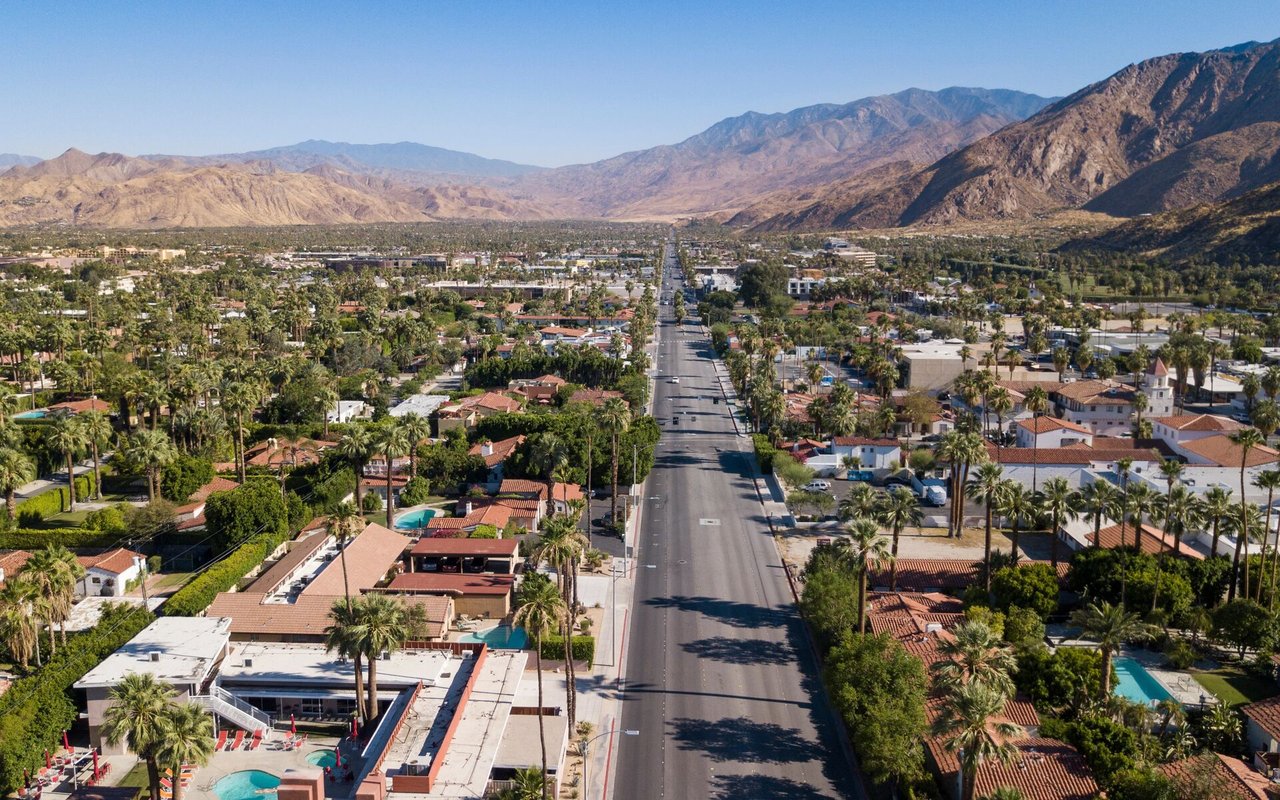
235,632 people live in Fontana, where the median age is 33.3 and the average individual income is $31,117. Data provided by the U.S. Census Bureau.
Total Population
Median Age
Population Density
Average individual Income
Fontana is one of the most misread housing markets in the Inland Empire. Buyers see a citywide median price and assume the whole city trades the same way — then discover that two homes at identical list prices can carry monthly payments $400 apart, sit in different school districts, and appeal to completely different buyers. This guide walks Fontana the way we walk it with clients: quadrant by quadrant, with the carrying costs and tradeoffs out in the open.
Fontana sits in western San Bernardino County at the base of the San Gabriel Mountains, spanning roughly 43 square miles with a population above 214,000 — the second-largest city in the county and one of the fastest-growing in Southern California.
Its modern identity was forged in 1942, when Henry J. Kaiser built Kaiser Steel, the West Coast's first integrated steel mill, to supply wartime shipbuilding. Route 66 ran straight through town along Foothill Boulevard, and for four decades Fontana was a working city of citrus groves, steel wages, and roadside diners. The mill closed in 1984. What replaced it — massive logistics and distribution development, and for a time a motorsports venue on the old Kaiser site — set the city on the path it's still on today.
That history is why Fontana doesn't feel like one city. It feels like two:
South and Central Fontana — south of I-10 and along the historic Route 66 corridor — holds the post-war tract homes, traditional commercial strips, industrial employment base, and long-tenured neighborhood culture. Lots are bigger. HOAs are rare. Housing stock is older.
North Fontana — north of SR-210 — is almost entirely a product of the late 1990s onward: Sierra Lakes, Summit Heights, Hunters Ridge, Village of Heritage, Shady Trails. Master-planned subdivisions, new retail centers, foothill views, and school assignments that in some pockets route to Etiwanda rather than Fontana Unified. It reads more like adjacent Rancho Cucamonga than like the historic core three miles south.
Understanding which Fontana you're shopping is the single most useful thing a buyer can learn about this market.
Data current as of September 2026. Market conditions shift; confirm figures before making decisions.
Fontana has settled into a stable, moderately competitive market after several years of sharp appreciation. Demand holds up because the value proposition holds up — buyers priced out of Los Angeles and Orange County get substantially more square footage here.
How Fontana sits against its neighbors:
City | Median Price | $/Sq. Ft. | Position |
|---|---|---|---|
Rancho Cucamonga | $755,000–$789,000 | $410–$430 | Premium tier — mature foothill neighborhoods, top-rated schools |
Fontana | ~$651,000 | $351–$357 | Middle-tier anchor; North Fontana overlaps mid-tier Rancho |
Jurupa Valley | $640,000–$660,000 | $345–$355 | Comparable pricing across the Riverside County line; more large-lot and equestrian stock |
Rialto | $590,000–$610,000 | $320–$335 | Lower entry point, fewer master-planned communities |
The honest read: Fontana is priced between Rancho Cucamonga's premium and Rialto's value floor, and North Fontana specifically competes head-to-head with mid-tier Rancho Cucamonga on build quality and price — which is exactly why buyers should compare those two markets directly rather than dismissing Fontana on reputation.
This is where Fontana rewards local knowledge. Price, tax burden, school district, and lot flexibility all change within a few miles.
The city's highest-value quadrant, built largely from the late 1990s through today, with foothill views and immediate SR-210 access.
Sierra Lakes — A master-planned community wrapped around the public Sierra Lakes Golf Club, with wide avenues, modern single-family tract homes, and walking distance to Falcon Ridge Town Center. Roughly $685,000 to $900,000. A strong fit for buyers who want planned-community amenities without condo-level HOA dues.
Hunters Ridge — Set against the San Gabriel foothills with real elevation and genuine view lots. Built mostly late 1990s through early 2000s, homes run larger at 2,400–3,800 square feet, generally $720,000 to over $1,100,000. Portions are assigned to Etiwanda School District, which is the primary driver of buyer competition here.
Coyote Canyon — Far northwestern corner, adjacent to Rancho Cucamonga. Estate-style residences with expansive floor plans, larger lots, and mountain backdrops. Among the highest price tags in the city at $900,000 to $1,200,000+.
Summit Heights — Along the western border next to Rancho Cucamonga. A polished, quiet tract of cul-de-sacs and neighborhood parks, typically $720,000 to $850,000. Often the best value for buyers who want a Rancho-adjacent address without Rancho pricing.
Village of Heritage — One of North Fontana's earlier master plans, late 1980s into the 1990s, centered on Heritage Circle Park and neighborhood elementary schools. Home values generally $650,000 to $760,000, making it the entry point into North Fontana's lifestyle.
Falcon Ridge — Adjacent to Sierra Lakes, consisting of late-2000s builds and newer infill. Popular with commuters for near-immediate SR-210 access and walkable retail.
The civic and historic core, running roughly from Base Line Road south to I-10.
Downtown and Civic Center — Centered on Sierra Avenue and Fontana Boulevard, with historic brick storefronts, the Lewis Library & Technology Center, city offices, and the Metrolink station. The most transit-connected part of the city.
Route 66 Corridor — Retail corridors interwoven with mid-century residential pockets. Homes are mostly single-story post-war tracts built between 1950 and 1975, typically $520,000 to $630,000. This is the true entry point for single-family ownership in Fontana, and the place where condition varies most block to block.
South of I-10, industrial parks and logistics hubs sit alongside established residential enclaves.
Southridge Village — A large 1980s master plan built along the southern hills, functioning almost as a self-contained suburb with its own parks, schools, and shopping. Inventory spans condos, townhomes, and detached homes, generally $550,000 for attached product to around $640,000 detached.
South Fontana Residential Pockets — The streets around Jurupa Avenue hold traditional 1960s–1980s homes, many on flat lots of 10,000 square feet or more with zoning that accommodates ADUs, workshops, or heavy vehicle storage. For trades, contractors, and multi-vehicle households, this is the most functional real estate in the city.
In the far south near the Riverside County line and the Jurupa Mountains, this area mixes 1980s development with 2000s tract builds, generally $600,000 to $710,000. It offers larger lot dimensions and regional park access with less freeway exposure than the northern corridors.
Eighty years of building cycles left Fontana with four distinct housing generations, and they rarely overlap geographically.
Kaiser-era tract homes (1940s–50s) in Central and South Fontana were built for mill workers: 900–1,400 square feet, single-story California ranch or minimalist traditional, raised foundations, one- or two-car garages. Cheapest entry into the market, most likely to need systems work.
1980s–90s subdivisions, dominated by Southridge and early Heritage Village, lean Spanish Mediterranean — stucco and tile roof — with two-story layouts, vaulted ceilings, and two- to three-car garages.
2000s master-planned product concentrated in Sierra Lakes, Hunters Ridge, and Summit Heights brought 2,200 to 4,000+ square foot floor plans, open-concept kitchens, great rooms, and main-floor suites suited to multi-generational households. This is the single most in-demand housing type in the city.
Current new construction north of SR-210 favors modern farmhouse and contemporary designs with solar packages, EV charging, and smart-home integration standard — usually on smaller private yards, with the square footage moved indoors.
Three property features worth flagging because they drive value locally more than buyers expect:
Lot size runs 7,500 to 15,000+ square feet in older Central and South Fontana, versus 4,000 to 6,500 square feet in newer North Fontana master plans. Buyers who want yard space are usually better served south of I-10.
RV and work-vehicle parking is common in Central and South Fontana — wide side-yard gates, deep driveways, no HOA restrictions. In North Fontana, HOA rules and narrow setbacks effectively prohibit it. This is one of the most frequent mismatches we correct with buyers.
Pools appear in roughly 20–35% of single-family inventory, concentrated in Hunters Ridge, Sierra Lakes, and 1980s Southridge homes. With regular 95°F-plus summers, pools command a meaningful resale premium here.
This is where Fontana punishes buyers who shop on list price alone. A $750,000 home in South Fontana can carry a materially lower monthly payment than a $750,000 home in North Fontana, purely because of special assessments.
Property taxes start at San Bernardino County's 1% base rate plus voter-approved bonds for schools and water infrastructure. Effective base rates in Fontana generally land between 1.15% and 1.25%.
Mello-Roos is the variable that changes the math. Many North Fontana neighborhoods built after 1990 sit inside active Community Facilities Districts that funded their own roads, sewers, fire stations, and schools. In Sierra Lakes, Summit Heights, Hunters Ridge, and the newer builds along the SR-210 corridor, CFD assessments commonly add 0.3% to 0.8% annually, pushing the total effective rate to roughly 1.6%–2.05%. In practical terms that's $150 to $450 or more per month on top of base taxes. Most properties in Central Fontana, Southridge, and South Fontana carry no Mello-Roos at all, or only minimal legacy assessments.
HOA dues run $70 to $250 monthly in North Fontana master plans, covering private parks, greenbelts, and patrol. Condos and townhomes run $250 to $420, including exterior maintenance and building insurance. Most older single-family neighborhoods in the historic core and South Fontana have no HOA.
Two practical notes from experience: CFD rates and bond schedules change, and they vary by tract — sometimes street to street within the same community. Always pull the actual tax bill and the CFD disclosure on the specific parcel before writing an offer, and run the comparison on total monthly cost rather than purchase price. We do this analysis for every North Fontana buyer we represent, and it regularly changes which neighborhood they end up in.
Fontana does not sit inside a single school boundary, and the district lines have a direct, measurable effect on home values.
Fontana Unified School District serves most of the city — Central, South, and East Fontana — across more than 40 K–12 campuses. High schools include Fontana High ("Fohi"), A.B. Miller, Henry J. Kaiser, Jurupa Hills, and Summit High, with Summit in North Fontana typically ranking among the district's strongest. FUSD also runs dual-language immersion programs, including Dolores Huerta International Academy, and STEM pathways at newer campuses.
Etiwanda School District (K–8) and Chaffey Joint Union High School District (9–12) serve specific far-northwest and North Fontana pockets, including parts of Hunters Ridge, Heritage Village, and areas near the Rancho Cucamonga border. Campuses like East Heritage Elementary, Falcon Ridge Elementary, Heritage Intermediate, and Etiwanda High School are the draw. Homes inside these boundaries frequently command a 5% to 10% premium over comparable square footage elsewhere in Fontana.
Colton Joint Unified covers a small portion of far eastern Fontana near the Rialto border, with students attending schools such as Bloomington High.
Because these lines don't follow neighborhood names cleanly, verify school assignment by exact address, not by community. We've seen buyers pay the Etiwanda premium for a home that wasn't actually zoned for it.
For higher education, the Chaffey College Fontana Campus on Sierra Avenue in downtown offers associate degrees, vocational certificates, and transfer coursework — a real workforce-development anchor for the western Inland Empire.
Three interstates and a commuter rail line make Fontana one of the better-connected cities in the region.
I-10 crosses South-Central Fontana, running west toward Los Angeles and east toward Redlands and Palm Springs. SR-210 runs through North Fontana and is the smoother, less truck-heavy option into Pasadena and the San Gabriel Valley — a genuine quality-of-life difference for daily commuters, and part of why North Fontana carries a premium. I-15 borders the western edge, connecting north to the High Desert and south toward Corona and San Diego County.
The Fontana Metrolink Station downtown at 16777 Orange Way serves the San Bernardino Line, with express trains reaching Los Angeles Union Station in roughly 60 to 70 minutes. It offers over 300 free parking spaces, bike storage, and bus connections. Omnitrans provides regional bus service across the city.
Realistic drive times, off-peak and at rush hour:
Destination | Distance | Off-Peak | Rush Hour |
|---|---|---|---|
Ontario International Airport | 10–14 mi | 12–18 min | 20–35 min |
Downtown Los Angeles | ~50 mi | 50–65 min | 80–120+ min |
Orange County (Anaheim/Irvine) | 35–45 mi | 45–55 min | 75–110 min |
Victoria Gardens, Rancho Cucamonga | 6–10 mi | 10–15 min | 15–25 min |
If your commute is LA-bound and daily, the Metrolink option deserves serious weight in your neighborhood decision — it's part of why downtown-adjacent Central Fontana is underrated relative to its price.
Fontana's recreation infrastructure is stronger than most buyers expect, and it's one of the city's genuine public investments.
Fontana Park and Aquatic Center in North Fontana is the flagship: 44 acres with a 14-lane competition pool, splash park and slides, a large skate park, dog parks, sports fields, and the Jessie Turner Health & Fitness Community Center. Jack Bulik Park anchors Central Fontana with baseball diamonds, basketball courts, a skate park, and the city's busiest youth sports leagues. Martin Tudor Jurupa Hills Regional Park in South Fontana offers sports fields and picnic shelters plus direct access to hiking paths climbing the Jurupa Mountains for valley-wide views.
For quieter outdoor time, the Mary Vagle Nature Center at the foot of the Jurupa Hills has exhibit halls, earth trails, a pond, and native plant gardens — a good local birding spot. Sierra Lakes Golf Club is a public 18-hole championship course designed by Ted Robinson, set against the San Gabriels and serving as the centerpiece of the Sierra Lakes community.
North Fontana residents are also 15 to 20 minutes from Lytle Creek and the San Bernardino National Forest, with hiking, streams, camping, and off-road routes. That proximity to real mountain access is one of the most underrated perks of buying north of SR-210.
Downtown Fontana along Sierra Avenue is in the middle of a steady revitalization aimed at building a walkable civic core. Center Stage Theater, housed in a renovated 1937 Art Deco building, hosts live performances and community events. The city runs street fairs, holiday parades, and a weekly Fontana Farmers Market with local growers, artisan vendors, and street food.
The city's signature tradition is the Fontana Days Run, held every June since 1955. The half marathon drops nearly 2,500 feet from the San Bernardino National Forest down into downtown, and is billed as one of the fastest half-marathon courses in the world — it draws runners internationally and is the single best day to see Fontana's community character on display.
Day-to-day retail clusters in the north. Falcon Ridge Town Center at Summit Avenue and SR-210 anchors with Target and Kohl's plus dining and services. Sierra Lakes Marketplace near Sierra Avenue and SR-210 carries Costco, Home Depot, Ralphs, casual dining, and auto services. For higher-end shopping, residents are 10 to 15 minutes from Victoria Gardens in Rancho Cucamonga or Ontario Mills.
Fontana transitioned from steel manufacturing into a logistics, healthcare, and public-sector economy.
Logistics and warehousing dominate. With I-10, I-15, and SR-210 access, proximity to Ontario International Airport, and major rail lines, South and Central Fontana host millions of square feet of industrial space — Amazon, UPS and FedEx freight terminals, and national retail distribution operations among them. That sector employs heavily in warehouse operations, logistics management, fleet routing, and supply chain roles.
Kaiser Permanente Fontana Medical Center is one of the largest single employers in the city, with a multi-story hospital tower, emergency department, and extensive specialty clinics staffing thousands of clinical and administrative positions.
Fontana Unified School District and the City of Fontana — including public works and the Fontana Police Department — round out the largest local employers.
Many residents commute to neighboring job centers: Ontario, concentrated around the airport and the Haven Avenue corridor for corporate, aviation, financial, and hospitality work, and Rancho Cucamonga, home to legal, insurance, corporate administrative offices, and county court facilities.
We'd rather a client rule Fontana out early than discover a dealbreaker after closing. Here's the honest accounting.
Fontana works well for:
Growing families who need modern square footage. A $700,000–$850,000 budget buys a substantially larger and newer home in North Fontana than the same money buys in Rancho Cucamonga, let alone Los Angeles or Orange County.
LA and Inland Empire commuters, particularly those who can use SR-210 or the Metrolink San Bernardino Line rather than fighting I-10.
Multi-generational households. The 2000s-built stock has an unusually high share of five-bedroom, three-car-garage homes with main-floor suites.
Buyers who need no-HOA, flexible-use property. Older Central and South Fontana lots offer size, low tax baselines, and room for RVs, ADUs, or workshops — a combination that's getting hard to find anywhere in Southern California.
Fontana is a poor fit for:
Buyers sensitive to industrial infrastructure. South and Central Fontana host large logistics operations, and heavy diesel truck traffic along corridors like Slover and Jurupa Avenues brings persistent noise and road wear.
Anyone with serious respiratory vulnerability. The Inland Empire's geography traps smog against the mountains, and ozone and particulate levels in the southern part of the city rank among the higher brackets in Southern California. This is worth researching by specific address.
People who dislike heat. July through September routinely runs 95°F to 105°F, with air-conditioning costs to match.
Buyers looking for walkable, turnkey older-home character. Central Fontana's post-war neighborhoods can feel fragmented, with uneven maintenance standards, aging infrastructure, and commercial zoning close by.
Is Fontana a good place to buy real estate? For long-term equity and home size per dollar, yes. Fontana is the county's second-largest city, with ongoing public infrastructure investment, continuing commercial development in the north, and an employment base anchored in healthcare and logistics that doesn't swing with a single industry.
Is Fontana affordable compared to the rest of Southern California? Relative to coastal Los Angeles and Orange County, where medians regularly exceed $1,000,000, yes — a median near $651,000 makes Fontana a realistic path into single-family ownership. Just remember that carrying costs vary widely depending on Mello-Roos exposure.
Which part of Fontana is best to live in? It depends on what you're optimizing for. North Fontana, above SR-210, is the premier area for modern master-planned homes, foothill views, and the strongest school assignments including Etiwanda-zoned pockets. Southridge and South Fontana serve budget-conscious buyers and anyone who needs a large lot, RV access, or ADU potential. Central Fontana offers the lowest entry prices and the best transit access.
Does Fontana have Mello-Roos taxes? Yes, primarily in North Fontana. Most developments built after 1990 north of Base Line Road or SR-210 sit in active Community Facilities Districts, adding roughly $150 to $450 or more per month. Most older homes in Central and South Fontana carry none. Always verify the tax line items on the specific parcel before submitting an offer.
What are the property tax rates in Fontana? The baseline is approximately 1.2% to 1.25% of assessed value. In North Fontana master plans with active CFDs, effective rates can reach 1.6% to 2.05%.
Fontana is a street-level market, not a citywide one — the difference between a strong purchase and an expensive lesson usually comes down to which side of a school boundary you're on, whether a tract carries a CFD assessment, and whether the lot actually supports how you plan to live. Michael Mucino, Broker/Owner of Camden McKay Realty with more than two decades in Inland Empire real estate, and Lisa Mucino, a licensed agent since 2015, work these neighborhoods directly. They handle tax and CFD verification, district confirmation by address, and total-monthly-cost comparisons across North, Central, and South Fontana before a client ever writes an offer — and they'll tell you plainly when a neighborhood isn't the right fit. Whether you're buying your first home, moving up, or preparing to list, reach out for a complimentary home valuation or a Fontana buyer consultation.
Camden McKay Realty
14007 Galliano Court, Rancho Cucamonga, CA 91739
Phone: (442) 305-7457
Email: [email protected]
Michael Mucino — CA DRE# 01374697 | Lisa Mucino — CA DRE# 01976041
There's plenty to do around Fontana, including shopping, dining, nightlife, parks, and more. Data provided by Walk Score and Yelp.
Explore popular things to do in the area, including Sierra 2 Truck & Auto, West Arrow Market, and Ananda Bazaar.
| Name | Category | Distance | Reviews |
Ratings by
Yelp
|
|---|---|---|---|---|
| Dining | 0.4 miles | 1 review | 5/5 stars | |
| Dining | 0.84 miles | 0 reviews | 0/5 stars | |
| Dining | 1 miles | 0 reviews | 0/5 stars | |
| Dining | 1.01 miles | 0 reviews | 0/5 stars | |
| Dining | 1.07 miles | 1 review | 5/5 stars | |
| Dining | 1.08 miles | 0 reviews | 0/5 stars | |
| Dining | 1.27 miles | 0 reviews | 0/5 stars | |
| Dining | 1.27 miles | 0 reviews | 0/5 stars | |
| Dining | 1.27 miles | 0 reviews | 0/5 stars | |
| Dining | 1.33 miles | 10 reviews | 1.6/5 stars | |
| Dining | 1.33 miles | 0 reviews | 0/5 stars | |
| Shopping | 0.85 miles | 0 reviews | 0/5 stars | |
| Shopping | 0.92 miles | 0 reviews | 0/5 stars | |
| Active | 1.19 miles | 1 review | 1/5 stars | |
| Beauty | 0.61 miles | 2 reviews | 5/5 stars | |
| Beauty | 0.78 miles | 0 reviews | 0/5 stars | |
| Beauty | 0.92 miles | 2 reviews | 3.5/5 stars | |
| Beauty | 1.01 miles | 0 reviews | 0/5 stars | |
| Beauty | 1.05 miles | 1 review | 5/5 stars | |
| Beauty | 1.09 miles | 0 reviews | 0/5 stars | |
| Beauty | 1.1 miles | 0 reviews | 0/5 stars | |
| Beauty | 1.26 miles | 0 reviews | 0/5 stars | |
| Beauty | 1.26 miles | 3 reviews | 3.3/5 stars | |
| Beauty | 1.31 miles | 0 reviews | 0/5 stars | |
|
|
||||
|
|
||||
|
|
||||
|
|
||||
|
|
||||
|
|
Fontana has 62,789 households, with an average household size of 3.7733333333333334. Data provided by the U.S. Census Bureau. Here’s what the people living in Fontana do for work — and how long it takes them to get there. Data provided by the U.S. Census Bureau. 235,632 people call Fontana home. The population density is 4,912 and the largest age group is Data provided by the U.S. Census Bureau.
Total Population
Population Density Population Density This is the number of people per square mile in a neighborhood.
Median Age
Men vs Women
Population by Age Group
0-9 Years
10-17 Years
18-24 Years
25-64 Years
65-74 Years
75+ Years
Education Level
Total Households
Average Household Size
Average individual Income
Households with Children
With Children:
Without Children:
Blue vs White Collar Workers
Blue Collar:
White Collar:
Explore Other Neighborhoods
14007 Galliano Court Rancho Cucamonga, CA 91739
Michael Mucino | CA DRE# 01374697
Lisa Mucino | CA DRE# 01976041
14007 Galliano Court Rancho Cucamonga, CA 91739
Michael Mucino | CA DRE# 01374697
Lisa Mucino | CA DRE# 01976041