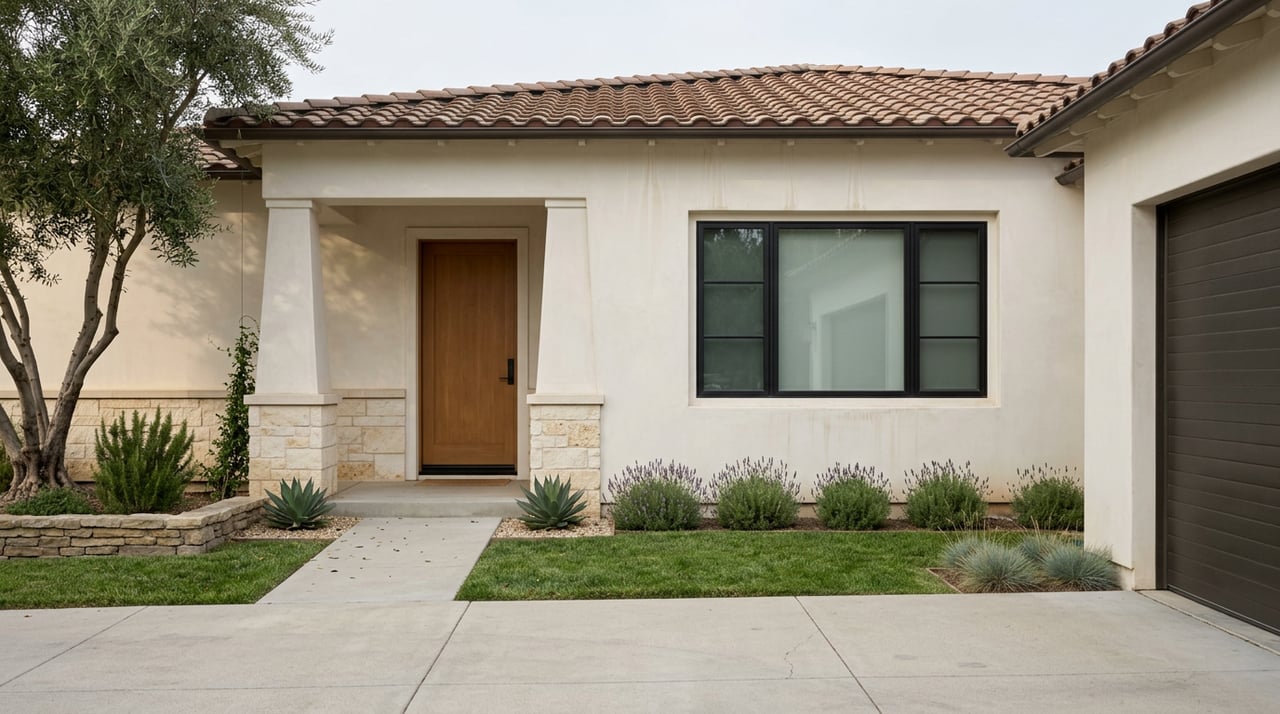
Two Rancho Cucamonga homes can list for the same price, sit on similar lots, and still land buyers with monthly housing payments that differ by two or three hundred dollars before either loan closes. Nobody notices this at the open house. Everybody notices it at underwriting, when the lender pulls the tax bill and asks about a line item called Mello-Roos.
The gap is not really about the home. It is about which side of an invisible district boundary the parcel sits on, and in Rancho Cucamonga that boundary runs through the city in ways that have very little to do with which ZIP code sounds nicer.
The Same City Produces Very Different Tax Bills
Rancho Cucamonga's overall median effective property tax rate sits around 1.10 percent, but that citywide number hides real variation once you look at ZIP codes. County tax data compiled in 2026 shows the 91701 ZIP carrying a median effective rate near 1.09 percent, while 91739 runs closer to 1.26 percent, a spread of roughly 0.17 percentage points across the same city. In dollar terms, that translates to a median annual bill around $4,273 in the 91730 ZIP compared with roughly $7,798 in 91739.
That is not a difference in home value. It is a difference in what sits underneath the home value: school district levies and, in a meaningful number of tracts, an active Community Facilities District special tax layered on top of the standard one percent.
Rancho Cucamonga Has Nine Named Districts, Not One Blanket Rule
Most explainers treat Mello-Roos as a single yes-or-no question. Rancho Cucamonga's own government page tells a more specific story. The city currently lists multiple active Community Facilities Districts, each formed for a distinct purpose and a distinct footprint:
| District | Area | What It Funds |
|---|---|---|
| CFD 85-1 | Archibald, Etiwanda, Highland, and Fourth Street boundaries | Fire suppression services and facilities |
| CFD 2000-01 (South Etiwanda) | South Etiwanda | Street, sewer, water, storm drain, and landscaping bonds |
| CFD 2000-02 (RC Corporate Park) | Milliken Avenue, Arrow Route, Foothill Boulevard corridor | Street improvement bonds |
| CFD 2000-03 (Rancho Summit) | Rancho Summit | Park improvements including equestrian facilities, courts, and ball fields |
| CFD 2001-01 | Victoria Gardens Mall area | Street, storm drain, water, and sewer improvements |
| CFD 2004-01 (Rancho Etiwanda Estates) | Rancho Etiwanda Estates | Park and equestrian facilities, streets, water and sewer, school facilities, open space |
| CFD 2006-01 (Vintner's Grove) | Vintner's Grove | Street, landscape, water and sewer improvements |
| CFD 2006-02 (Amador on Route 66) | Amador on Route 66 | Street, landscape, water and sewer improvements |
| CFD 2017-01 (North Etiwanda) | Etiwanda, Wilson, and East Avenue boundaries | Ongoing landscaping and parkway maintenance |
If a home sits inside one of these polygons, the special tax shows up as its own line on the San Bernardino County property tax bill. If it sits just outside, the bill looks like a standard Prop 13 calculation. Two houses on streets that intersect can land on opposite sides of that line.
What the Line Item Actually Costs Each Month
Base property tax rates in Rancho Cucamonga generally run in the 1.1 to 1.25 percent range, but in tracts with an active CFD, the effective rate climbs closer to 1.5 to 1.8 percent once the special tax is added in. Across the broader Inland Empire, that kind of assessment typically runs $170 to $500 a month depending on the specific district, which lines up with the gap already visible in the ZIP-level bills above.
That monthly number matters more than it sounds like it should, because lenders do not treat it as optional. FHA, VA, and conforming loans all require the recurring special tax to be counted in the borrower's housing expense for debt-to-income purposes, the same way a mortgage payment or HOA due is counted. A Mello-Roos assessment of roughly $4,000 a year adds close to $333 to the monthly housing payment used in that calculation, which can reduce a buyer's qualifying loan amount by somewhere in the neighborhood of $50,000 to $60,000 compared with an identical purchase price in a non-CFD tract.
That is the part buyers tend to miss when they are comparing list prices side by side. The comparison that actually matters is not sticker to sticker. It is qualifying payment to qualifying payment, and the CFD line item can move that number before either offer is even written.
The HOA Layer Most Comparisons Skip
Mello-Roos and HOA dues are two separate obligations that often show up in the same neighborhoods, which makes the total monthly gap even wider than the tax bill alone suggests. Master-planned sections of the city built around Victoria, Terra Vista, Day Creek, and The Resort commonly carry HOA dues in the range of $235 to $380 a month, covering common-area landscaping, parks, pools, or gated entries depending on the community. An established pocket of Alta Loma without an HOA and without a CFD can sit a few streets away from a newer tract carrying both, and the two homes can look identical on a listing sheet while carrying monthly costs that differ by several hundred dollars once taxes and dues are both counted.
Why the CFD Side of the Line Is Not Automatically the Worse Deal
None of this makes the newer, CFD-carrying tracts a bad buy. Homes in Etiwanda and the Day Creek corridor are frequently ten to twenty years newer than the resale stock in West Rancho Cucamonga or established Alta Loma, with wider streets, updated school facilities, and floor plans built to more current standards. For a buyer prioritizing new construction over an older lot, the special tax is the price of that trade, not a penalty for making a bad choice.
The detail worth asking about is not whether a home has a CFD, but how many years are left on it. These special taxes are tied to a bond term, typically running 20 to 40 years from the date the district issued its debt, and the tax disappears once the bond is retired. A district with eight years left reads very differently in a monthly budget than one with twenty five years still on the clock, even if the current annual assessment is identical.
How to Actually Check Before You Write an Offer
The fastest way to settle the question on any specific address is to pull the current secured property tax bill and look for a line item labeled Community Facilities District, CFD, or Special Tax, then match it against the boundaries the city has published for districts like South Etiwanda, Rancho Etiwanda Estates, or Vintner's Grove. From there, the district's Rate and Method of Apportionment, available through the city or the CFD administrator, will show the maximum authorized tax, any built-in annual increases, and the bond's remaining term. California law also requires sellers of property inside a CFD to provide written notice of the special tax before close, so this is not information a buyer has to dig for alone.
If you are comparing a listing in the Day Creek or Victoria Gardens corridor against something in Terra Vista or Alta Loma, it is worth running that comparison before you get attached to either one. Camden McKay Realty works these tracts block by block, and can pull the parcel-level detail on any specific address so the monthly number you qualify around reflects the full picture, not just the price on the sign.
A Few Questions Worth Asking Directly
Does Mello-Roos ever go away? Yes. The special tax is tied to a bond with a defined term, usually 20 to 40 years from issuance. Once the district retires its bonds, the assessment drops off the tax bill.
Is Mello-Roos the same thing as HOA dues? No. Mello-Roos is a public special tax collected by San Bernardino County and billed alongside your property tax. HOA dues are a private fee for a homeowners association. A home in a master-planned tract can carry both at the same time.
Will my lender count it against me? Yes, in most cases. FHA, VA, and conforming loan programs generally require lenders to include a documented Mello-Roos amount in your housing expense for qualifying purposes, which affects the loan amount you can be approved for.
If you are weighing a new-construction tract in Etiwanda against a resale in an older section of the city, or you just want to know what a specific parcel actually carries before you make an offer, reach out to Michael and Lisa Mucino for a free neighborhood consultation or sign up for local market updates.