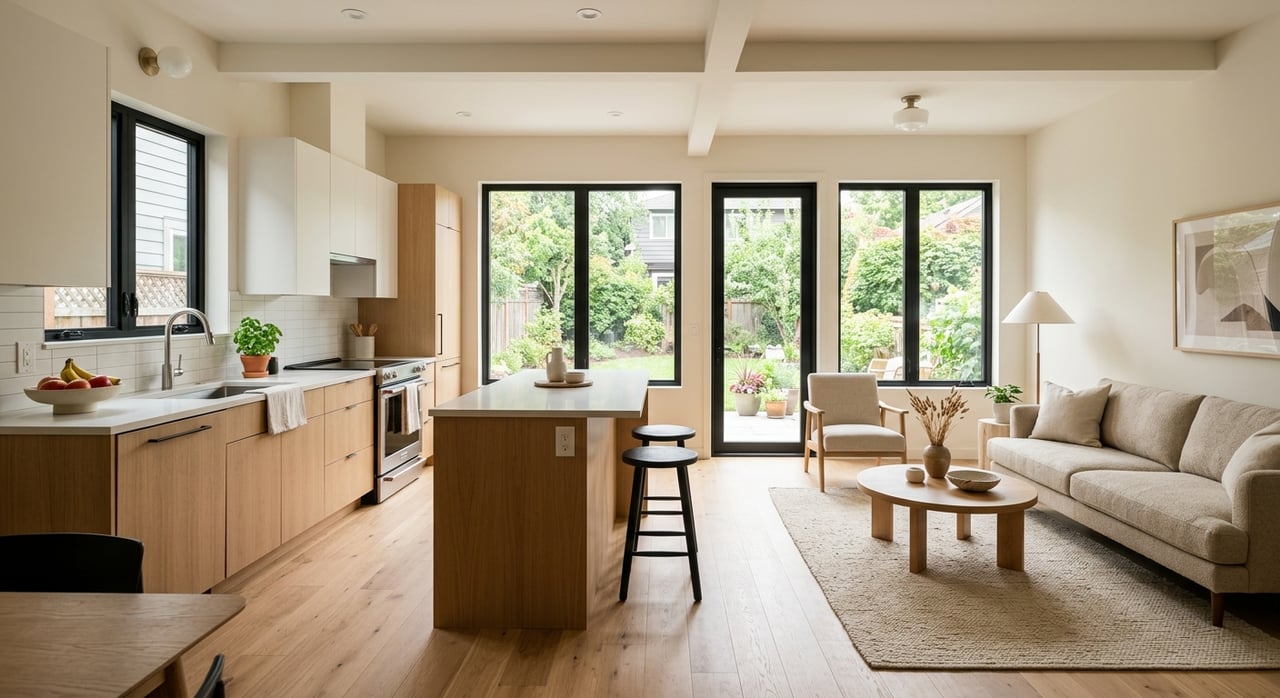
Wondering whether now is the right time to sell your starter home in La Verne? If you are trying to balance timing, pricing, prep work, and your next move, it can feel like a lot at once. The good news is that La Verne remains a relatively active market, but starter-home sellers still need a smart plan to stand out and protect their bottom line. Let’s walk through what you can realistically expect.
La Verne starter homes still draw attention
La Verne is still a strong-price market, but that does not mean every home sells easily or instantly. Redfin’s May 2026 snapshot shows a median sale price of $969,420, median days on market of 35, a 99.9% sale-to-list ratio, and 43% of homes selling above list.
At the same time, Zillow’s late-May 2026 data shows median days to pending at 21, inventory at 60 homes, and a median list price above $1 million. Even with those healthy numbers, 25% of listings had price drops according to Redfin, which tells you buyers are still selective.
For a starter-home seller, that usually means your home can attract solid interest if it is priced and presented well from day one. It also means the market may not forgive an overly ambitious list price.
Starter-home pricing is hyperlocal
One of the biggest mistakes sellers make is assuming the citywide median tells the whole story. In La Verne, values vary a lot by micro-market.
Zillow neighborhood estimates range from about $875,901 in the Foothill Boulevard Corridor to more than $1.53 million in North La Verne Hillside. Redfin sold examples also show smaller homes closing in the mid-$700,000s to high-$800,000s, so your likely value depends heavily on your exact location, size, condition, and nearby comparable sales.
Why the first price matters
In a market where homes are going pending in roughly 21 to 35 days, the first few weeks matter most. If your home hits the market too high, you may lose the early attention that often produces the best offers.
That risk is especially important for starter homes because buyers in this range tend to be more payment-sensitive. With Freddie Mac reporting a 30-year fixed mortgage rate of 6.48% as of June 4, 2026, monthly affordability remains a real factor.
What buyers notice right away
Buyers often compare your home to every similar option they can afford, not just to the city average. If your home feels cleaner, better maintained, and more appropriately priced than competing listings, you have a stronger chance of creating momentum quickly.
That is why pricing is not just about maximizing the number. It is about positioning your home to generate serious interest while the listing is still fresh.
Who may buy your starter home
La Verne’s buyer pool is shaped by both local demographics and current market conditions. Census QuickFacts shows an owner-occupied housing rate of 69.2%, median household income of $103,761, average household size of 2.61, and a median owner-occupied home value of $817,000.
That suggests many buyers are local or regional households with established ties to the area. Redfin migration data supports that pattern, showing 78% of homebuyers searched to stay within the metro area, while only 4% came from outside metros.
Expect practical, budget-aware buyers
Even if your home is considered entry-level for La Verne, the likely buyer may still be careful about monthly payment, condition, and future upkeep. Nationally, first-time buyers made up just 21% of the market in 2025, according to NAR.
That does not mean first-time buyers are absent. It means your buyer could just as easily be a local move-up household, a downsizer looking for something simpler, or someone trying to stay in the area at a more accessible price point.
Prep matters more than expensive upgrades
If you are selling a starter home, you usually do not need to remodel everything to get ready. In many cases, the higher-value moves are simpler and more practical.
The most useful prep often includes:
- Decluttering each room
- Deep cleaning the home
- Fixing visible defects
- Touching up paint where needed
- Improving the look of the main living spaces
- Making the home easy to tour and easy to understand
NAR’s 2025 staging report found that 83% of buyers’ agents said staging makes it easier for buyers to visualize a home. It also found that 49% of sellers’ agents said staging reduced time on market.
Focus on the rooms buyers remember
You do not necessarily need to stage every room. NAR reported that many sellers’ agents instead recommend decluttering or correcting faults, and the most commonly staged rooms were the living room, primary bedroom, and dining room.
If you are deciding where to spend time and money, start there. For a starter home, buyers often respond best to spaces that feel functional, bright, and move-in ready.
Showings move fast in the early weeks
Because La Verne homes are often going pending in a matter of weeks, your showing activity may feel front-loaded. You may see the most serious traffic during the first week or two if the price and presentation are on target.
That means it helps to be ready before you list, not after. Last-minute repairs, half-finished projects, or clutter that lingers into showing week can cost you momentum.
What to expect from buyer feedback
Buyer comments usually center on three things:
- Price compared with similar homes
- Overall condition and maintenance
- Whether the home feels worth the monthly payment
If the same concerns come up more than once, that feedback is worth paying attention to. In a market where some homes sell above list but others take price drops, early feedback can tell you whether your strategy is working.
Inspections and negotiations are still part of the deal
Even in a competitive market, buyers may still ask for repairs or credits after inspections. That is a normal part of the process, especially when buyers are already stretching on affordability.
For starter-home sellers, this can feel frustrating if you have already invested time and money in prep. But it helps to expect some negotiation rather than assume the accepted offer is the final word.
Common pressure points after contract
The issues that often create friction are the same ones buyers worry about before they write an offer:
- Deferred maintenance
- Safety-related concerns
- System or appliance issues
- Roof or exterior wear
- Insurance questions tied to property location
The smoother your home shows and the better documented its condition is upfront, the easier these conversations usually become.
California disclosures matter in La Verne
Selling in California comes with important disclosure requirements, and La Verne sellers should expect these to be a meaningful part of the transaction. California sellers of single-family residential property must provide a Transfer Disclosure Statement that covers the home’s physical condition, defects or hazards, and special taxes or assessments.
California Civil Code 1103 also requires a Natural Hazard Disclosure Statement for relevant residential transfers. This can be especially important in La Verne because local fire hazard conditions may affect a property’s disclosures and buyer questions.
Wildfire and insurance questions may come up
According to the City of La Verne, more than one-third of the community is within a Very High Fire Hazard Severity Zone. The city explains that updated fire-hazard maps consider topography, fire weather, vegetation, and fire history.
For sellers, that means wildfire mitigation, insurance availability, and hazard disclosure questions may become part of the sale process. Even if your home is otherwise a typical starter property, these topics can influence buyer comfort and timing.
Budget for closing costs
When you sell, your proceeds are not just the sale price minus your mortgage balance. There are also closing costs to plan for.
One standard item in La Verne is Los Angeles County’s documentary transfer tax, which is $0.55 per $500 of value and is collected when the document is recorded. Knowing that cost ahead of time can help you estimate your net more accurately and plan your next move with fewer surprises.
What a realistic sale process looks like
If your starter home is priced against the immediate neighborhood, cleaned up well, and supported by complete disclosures, you may see the strongest activity early. In today’s La Verne market, many homes move within a few weeks, but results still depend on pricing discipline and condition.
You should also expect buyers to look closely at affordability, inspection items, and any wildfire or insurance-related concerns. In other words, demand is there, but preparation still matters.
Selling a starter home in La Verne is not just about putting a sign in the yard and waiting. It is about understanding your micro-market, making smart prep decisions, and staying ahead of the details that can slow a deal down.
If you want practical guidance on pricing, prep, and what buyers are likely to notice in your part of La Verne, reach out to Michael Mucino for a local, hands-on conversation.
FAQs
What is the La Verne market like for selling a starter home right now?
- La Verne remains a relatively active market, with current data showing homes going pending in about 21 to 35 days depending on the source, but pricing and presentation still matter because some listings are seeing price drops.
How should you price a starter home in La Verne?
- You should price based on your immediate micro-market, recent comparable sales, condition, and location rather than relying only on citywide averages, since home values vary significantly across La Verne.
What repairs or updates matter most before selling a starter home in La Verne?
- The most important prep is usually decluttering, deep cleaning, fixing visible defects, and improving key living areas rather than taking on major remodel projects.
Do California disclosures affect a starter home sale in La Verne?
- Yes, sellers of single-family residential property must provide required disclosures such as the Transfer Disclosure Statement and, when applicable, the Natural Hazard Disclosure Statement.
Can wildfire and insurance issues affect a La Verne home sale?
- Yes, because more than one-third of La Verne is within a Very High Fire Hazard Severity Zone, buyers may ask questions about hazard disclosures, mitigation, and insurance availability during the transaction.
What closing cost should La Verne sellers expect at recording?
- A standard cost to budget for is Los Angeles County’s documentary transfer tax of $0.55 per $500 of value when the document is recorded.