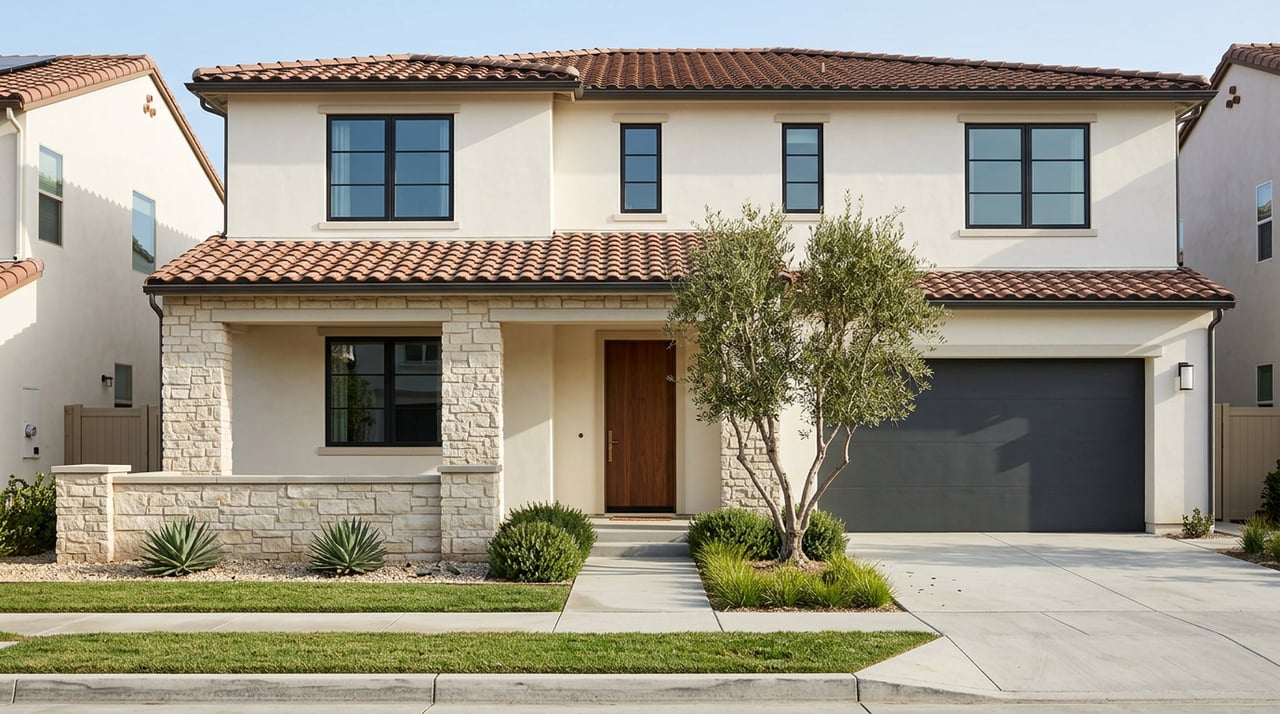
Picture a Saturday morning drive through north Fontana. Two model home lots sit less than ten minutes apart, both marketing three-bedroom houses in a similar price band, both staffed by sales counselors handing out the same glossy floor plan brochures. One buyer walks out of the first sales office thinking they have found their number. Then they tour the second community and the sales counselor mentions, almost as an aside, that this lot carries a special tax that will show up on the property tax bill every year for the next few decades. Same city. Same rough square footage. A different total bill for as long as the loan runs.
That gap is not a fluke. It is a structural choice builders make when they price a new subdivision, and it rarely shows up on the sign out front.
The list price answers the wrong question
When a buyer compares new construction in Fontana, the instinct is to line up base prices side by side. That comparison misses the two costs that actually determine what a household pays every month: a Mello-Roos special tax, known formally as a Community Facilities District or CFD assessment, and the ongoing HOA dues attached to the community.
Fontana's own Mello-Roos page confirms the city administers multiple active Community Facilities Districts, and any homeowner living inside one receives a special tax brochure in the mail every fall. That matters because a Mello-Roos assessment is not based on what the home is worth. It is a flat or formula-based charge tied to the parcel, set when the district was formed, and it typically runs for 20 to 40 years until the underlying bonds are repaid. Two homes that cost the same to buy can carry very different annual charges depending on which side of a district boundary the lot sits on.
Some Fontana builders have turned the absence of that tax into a selling point. Cherry Village, a townhome community built by MCo Development on Cherry Avenue, advertises its 82 homes starting in the low $400s with what the developer's own marketing describes as $0 Mello-Roos and low HOA dues, and states plainly that this structure saves buyers roughly $200 to $400 a month compared with comparable Inland Empire communities. That is a builder telling you, in writing, what the alternative typically costs.
What three current Fontana communities actually charge
Here is how three active 2026 communities stack up on the costs that do not show up in a headline price:
| Community | Builder | Starting Price Range | HOA | Mello-Roos Status |
|---|---|---|---|---|
| Cherry Village | MCo Development | Low $400s | Low, bundled with FHA-approved pricing | $0, per developer marketing |
| Aeris at Fontana | AL Homes | From $998,990 | None | Not advertised as included; confirm before writing an offer |
| The Arboretum, Blue Sage collection | Lennar | Around $635,000 | $204 per month | Not disclosed in public listing; confirm before writing an offer |
Aeris at Fontana, a small collection of single-family homes off Miller Avenue, markets owned solar and no HOA as part of its pitch to first-time buyers and commuters, with first deliveries expected around August 2026, which puts the community handing over keys right about now. The Arboretum sits in the Sierra Lakes area of north Fontana, home to the city's Sierra Lakes Specific Plan, a roughly 2,035-unit master plan built around an 18-hole golf course near Interstate 210, and the Blue Sage collection there carries a confirmed $204 monthly HOA charge that funds the recreation center, pool, and shared open space.
None of that tells a buyer whether a given lot is inside a CFD. That is a separate question, and it is the one that changes the math the most.
Why the CFD line moves the math more than the HOA does
An HOA payment buys something a buyer can see: a pool, a gate, landscaped common area. A Mello-Roos assessment is less visible but often larger. Industry guidance for 2025 and 2026 pegs typical annual Mello-Roos charges in active Southern California districts between $1,200 and $6,000, with the heaviest new developments running higher still. In CFD-dense zip codes, the combined effective property tax rate, meaning the base 1% plus every local add-on, can reach 1.5% to 1.7% of the purchase price, compared with roughly 1.1% to 1.3% in areas without a district.
That difference is not just an annual nuisance. Lenders count Mello-Roos in a buyer's debt-to-income ratio the same way they count a mortgage payment or HOA dues. A $4,000 annual assessment adds about $333 to the monthly housing cost a lender has to qualify against, and mortgage professionals working the Inland Empire have found that gap can reduce a buyer's approved loan amount by roughly $50,000 to $60,000 compared with an identical household shopping a non-CFD property. A buyer who assumes two Fontana homes at the same price point will qualify the same way can be wrong by tens of thousands of dollars before they ever sit down with a lender.
The second layer: what the incentive is actually buying you
Mello-Roos is not the only place cost hides in new construction right now. Builders across the market are leaning hard on rate buydowns and closing cost credits in 2026 rather than cutting sticker prices outright, because a lower advertised price can drag down values for every other lot in the same phase, while a rate buydown lowers the monthly payment without touching the number on the sign.
Realtor.com senior economist Joel Berner has warned that with this approach "the price of the house gets artificially inflated," a risk worth sitting with. A builder offering a 2-1 temporary buydown or a permanent rate reduction through a preferred lender may have built that cost into the base price rather than absorbing it. The two levers, Mello-Roos on one side and incentive-inflated pricing on the other, both push the same direction: they make a home look more affordable on the sign than it will feel on the mortgage statement.
What to actually check before you write an offer
California law already requires disclosure here. Under California Civil Code Section 1102.6, a seller of property inside a Community Facilities District has to provide a Notice of Special Tax before the sale closes, spelling out which CFD the parcel sits in. For new construction, that means asking the sales counselor directly and in writing, before falling for a floor plan, whether the specific lot carries a CFD assessment, what the current annual amount is, and what year the bond is scheduled to mature. Fontana's own Community Facilities Districts and Mello-Roos page is the place to start verifying a specific address rather than relying on what a sales office volunteers.
A few habits make the comparison fair:
- Convert every Mello-Roos figure to a monthly number by dividing the annual amount by 12, then add it to the HOA dues to get the real monthly carrying cost.
- Ask whether the builder's advertised rate includes a temporary buydown, and get the note rate that applies once the buydown period ends.
- Compare that combined number, not the base price, across every community on your list.
- If a builder is not marketing "no Mello-Roos" the way Cherry Village does, treat that as a reason to ask rather than assume the answer.
A few questions worth asking directly
Does a Mello-Roos tax ever go away? Most CFD bonds are structured to run 20 to 40 years from formation, and the special tax stops once the bonds tied to that district are paid off. The specific payoff year is public information tied to each district and worth requesting for any parcel you are seriously considering.
Is a $0 Mello-Roos home automatically the better deal? Not necessarily. It depends on the base price, the HOA, and what amenities that HOA funds. A community without a CFD but with a higher base price and a larger HOA can land at a similar or higher monthly cost than one with a modest assessment and lower dues. The only way to know is to run the full monthly number for each option.
How do I find out before I make an offer? Ask the builder's sales office for the parcel's CFD status in writing, then verify it against the Fontana Community Facilities Districts page or the county tax collector's parcel lookup rather than relying on a verbal answer alone.
New construction in Fontana is not short on choices this year, and the differences between communities go well past floor plans and elevations. If you are comparing builders, incentive packages, or the true monthly cost of a specific lot, Camden McKay Realty can walk through the numbers with you. Get in touch with Michael and Lisa Mucino to schedule a free neighborhood consultation or sign up for local market updates before you sit down at a builder's sales table.