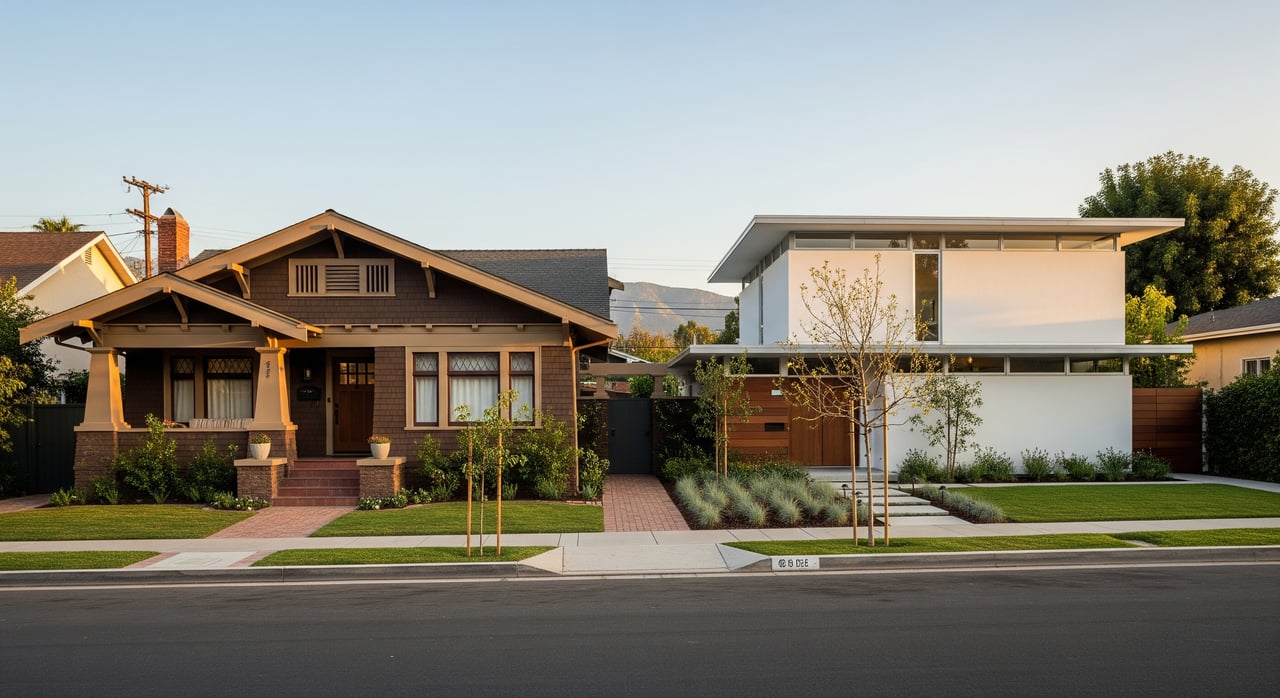
Torn between the warmth of a Craftsman bungalow and the clean lines of a Mid-Century home in Pasadena? You are not alone. Each style delivers a distinct look, layout, and set of maintenance needs that can shape daily life and long-term costs. In this guide, you will learn how to spot key features, budget for inspections and upgrades, understand historic rules, and decide which style fits your lifestyle. Let’s dive in.
Why these styles matter in Pasadena
Pasadena has deep roots in both eras. Craftsman homes flourished from roughly 1900 to 1930, from modest bungalows to landmark works by Greene & Greene, with the Gamble House as a well-known reference point for high-end craftsmanship. Mid-Century homes emerged after World War II, roughly 1945 to 1970, showing up in postwar subdivisions and hillside lots designed for indoor-outdoor living.
Age and style affect more than looks. They influence systems like electrical and plumbing, floor plan flow, energy performance, and what you can change on the exterior in historic districts. Local factors such as sun exposure, termite pressure, and seismic risk also play a role in maintenance and retrofit priorities.
What defines a Pasadena Craftsman
You will spot Craftsman homes in neighborhoods like Bungalow Heaven, Kendall Place, and other central areas.
- Exterior hallmarks:
- Low-sloped gabled roofs with wide eaves and exposed rafter tails.
- Generous front porches with sturdy tapered or square columns on piers.
- Natural materials like wood siding, shingles, stone, or brick.
- Double-hung wood windows, often grouped, with multipane uppers.
- Interior hallmarks:
- Built-ins such as bookcases, buffets, and window seats; rich wood trim.
- A fireplace as a focal point and original plaster walls in many homes.
- More compartmentalized plans with separate living and dining rooms.
- Common bungalow sizes run about 800 to 1,400+ square feet, with larger two-story examples in some areas.
- Systems and materials to confirm:
- Older electrical such as knob-and-tube or early cloth-insulated wiring if not updated.
- Original wood windows, plaster, and early plumbing.
- Lifestyle fit:
- Ideal if you value historic character, built-in craftsmanship, and classic neighborhood streetscapes.
What defines a Pasadena Mid-Century
Mid-Century homes appear throughout Pasadena in postwar tracts and hillside lots oriented to views and light.
- Exterior hallmarks:
- Clean, horizontal lines and low-pitched gable or flat roofs.
- Large glass areas like picture windows and clerestories.
- Materials such as concrete block, steel, stucco, or board-and-batten.
- Patios and sliding doors; some homes feature carports.
- Interior hallmarks:
- More open layouts with easy flow between living, dining, and kitchen.
- Minimal ornamentation and a focus on materials like wood paneling or terrazzo.
- Single-level living is common, with larger windows and, in some designs, higher ceilings.
- Systems and materials to confirm:
- Original HVAC in older examples, single-pane glazing, and in some cases mid-20th century aluminum wiring.
- Lifestyle fit:
- Great if you prefer airy, light-filled spaces, flexible layouts, and a modernist look that connects to the outdoors.
Floor plans and daily living
Craftsman layouts tend to feel intimate and defined. If you enjoy separate rooms for dining or a cozy fireplace-centered living room, this style may feel right. Many bungalows have modest bedrooms and smaller kitchens, though larger Craftsman homes offer more space.
Mid-Century layouts often feel open and social. If you like to entertain, prefer visual continuity between kitchen and living spaces, and value indoor-outdoor flow, the openness can be a clear advantage. Single-level living is common, which can simplify day-to-day access.
Renovation and inspection priorities
Older homes deserve thorough due diligence. Plan for a top-to-bottom inspection, and budget time for follow-up evaluations by licensed specialists.
Shared inspection checklist
- Structural and foundation: settlement, cracks, and drainage grading.
- Roof condition: leaks and flashing; flat roofs need extra attention.
- Termite and dry rot: order a Wood-Destroying Organism inspection.
- Electrical: look for knob-and-tube or aluminum wiring, inadequate amperage, and lack of grounding.
- Plumbing: original galvanized supply lines, cast-iron drains, or aging copper.
- HVAC and insulation: verify duct condition, equipment age, and insulation quality.
- Hazardous materials: expect lead-based paint in pre-1978 homes and possible asbestos in some mid-century materials.
Craftsman-specific watch-outs
- Preserving original woodwork while updating kitchens and baths can raise labor costs and require skilled carpentry.
- Plaster and lath can conceal outdated wiring or plumbing; repairs are more specialized than drywall.
- Window restoration is common if period accuracy matters; storm windows can boost efficiency while keeping originals.
- Raised foundations may need seismic anchoring, sill plate replacement, or cripple-wall bracing.
Mid-Century-specific watch-outs
- Flat or low-slope roofs need vigilant maintenance; leaks around large glass areas can cause hidden rot.
- Replacing large fixed windows with efficient glazing while preserving character can be expensive.
- Some materials, such as older siding or sealants, may require controlled asbestos abatement.
- Open plans can hide complex structural loads; layout changes may need engineered solutions.
Permits, preservation, and historic districts
Pasadena has active historic-preservation resources and designated historic districts. If a home sits in a district like Bungalow Heaven or is a landmark, exterior changes often require review by city historic planners or the Historic Preservation Commission. Interior changes are usually not regulated unless a home is landmarked.
Replacement materials and visible exterior changes such as windows, siding, porches, and rooflines may need design review. Matching in-kind materials is commonly encouraged. Any structural work, electrical, plumbing, HVAC, or additions will require city permits and inspections. Unpermitted work found during a sale can slow financing and closing.
The Mills Act may reduce property taxes for owners who agree to preserve historic properties. The program is administered by the city, and enrollment has specific rules and obligations. Always confirm current availability and requirements with the City of Pasadena before you rely on potential tax savings.
Safety and environmental rules to know
- Lead-based paint: federal rules require disclosure for pre-1978 homes, and renovation work that disturbs paint must follow EPA Renovation, Repair and Painting (RRP) guidelines with certified contractors.
- Asbestos: abatement must follow Cal/OSHA and local procedures. Small projects sometimes allow encapsulation if done properly.
- Termite control: comply with state pest control regulations, and review Wood-Destroying Organism reports during escrow.
- Seismic retrofits: older homes often benefit from foundation bolting, cripple-wall bracing, and chimney reinforcement. These upgrades can improve safety and may help with insurance eligibility and resale appeal.
Cost drivers to budget
Owning an older home is rewarding, but planning for predictable costs is key.
- Deferred maintenance: replacing original electrical, plumbing, HVAC, and roof systems can be a near-term need.
- Energy performance: single-pane windows, minimal insulation, and older HVAC drive higher utility bills until upgraded.
- Exterior maintenance: Craftsman wood siding, porches, and trim need routine painting and pest care. Mid-Century homes may need periodic flat-roof membrane replacement and maintenance around large glass.
- Insurance: some insurers charge more or limit coverage when a home has older wiring, aging roofs, or unreinforced chimneys. Check requirements early in escrow.
- Property taxes and incentives: property tax is set by county assessment. If a home qualifies for the Mills Act, taxes may decrease in exchange for preservation obligations.
- Permit-related time and cost: design review and in-kind materials in historic districts can add time and budget.
Financing options for upgrades
If you want to buy and renovate in one go, renovation loans are worth exploring. FHA 203(k) and conventional renovation products such as Fannie Mae HomeStyle allow financing for both purchase and rehab in a single loan. Underwriting rules and availability vary by lender.
For budgeting, add a healthy contingency. Older homes often reveal surprises during demolition or inspection, so plan for at least 10 to 20 percent above your initial renovation estimate.
Where to find these styles
- Craftsman: common in central Pasadena neighborhoods, especially historic districts like Bungalow Heaven and Kendall Place. You will also find larger two-story Craftsman homes scattered near the city’s core.
- Mid-Century: present in various postwar subdivisions and on hillside lots designed to take advantage of views and sunlight. You will see sliding doors to patios, carports in some examples, and strong indoor-outdoor connections.
Which style fits you best
Use this simple checklist to match your preferences.
- Choose Craftsman if you want built-ins, human-scale rooms, and distinctive wood details in walkable, established areas.
- Choose Mid-Century if you want open, light-filled spaces with flexible layouts and strong connections to the outdoors.
- If you prefer lower visual maintenance, some Mid-Century materials may help, but confirm roof and glazing costs.
- If you plan a major kitchen or layout change, Mid-Century homes may require less invasive structural work. Craftsman updates should respect built-ins and original woodwork if preserving character is important to you.
- If you want preservation incentives, confirm Mills Act eligibility and district status with the city.
Next steps
Start with a clear wish list and a realistic budget that includes inspections and likely upgrades. Confirm whether a home sits in a historic district, review past permits, and ask specialists to price critical updates like electrical, roofing, and seismic retrofits. When you find a candidate, line up quotes for any work you intend to complete soon after closing so you can plan cash flow and loan options.
If you want a calm, step-by-step approach to comparing properties, permits, and renovation scope, connect with a local advisor who understands both styles and the Pasadena process. To talk through options and get a practical game plan, reach out to Michael Mucino.
FAQs
What are the key differences between Craftsman and Mid-Century homes?
- Craftsman homes emphasize handcrafted woodwork, porches, and compartmentalized rooms, while Mid-Century homes favor open plans, large glass, and indoor-outdoor living.
How do historic districts affect renovations in Pasadena?
- In designated districts, exterior changes often require city historic review and design approval, while interior changes are usually less regulated unless the home is a landmark.
What inspections are most important for older Pasadena homes?
- Prioritize structural, roof, termite, electrical, plumbing, HVAC, and hazardous materials checks, with specialists for lead, asbestos, and any suspected seismic issues.
Are there tax incentives for preserving a historic Pasadena home?
- The Mills Act can reduce property taxes in exchange for a preservation agreement; confirm current availability, obligations, and application process with the city.
How should I budget for energy upgrades in older homes?
- Expect higher bills with single-pane windows and older HVAC; plan for insulation, efficient equipment, and window solutions tailored to the home’s character.
What financing helps combine purchase and renovation?
- Renovation loans such as FHA 203(k) and conventional options like HomeStyle can fund purchase and improvements in one mortgage, subject to lender rules.