Thinking about adding a small home in your backyard to help with family needs or rental income? In Upland, an accessory dwelling unit can be a practical way to grow space and flexibility without moving. The process is more straightforward than many people expect when you understand the basics. In this guide, you’ll learn what counts as an ADU, how permitting works, rough costs, financing paths, rental scenarios, and key planning steps for Upland. Let’s dive in.
What is an ADU?
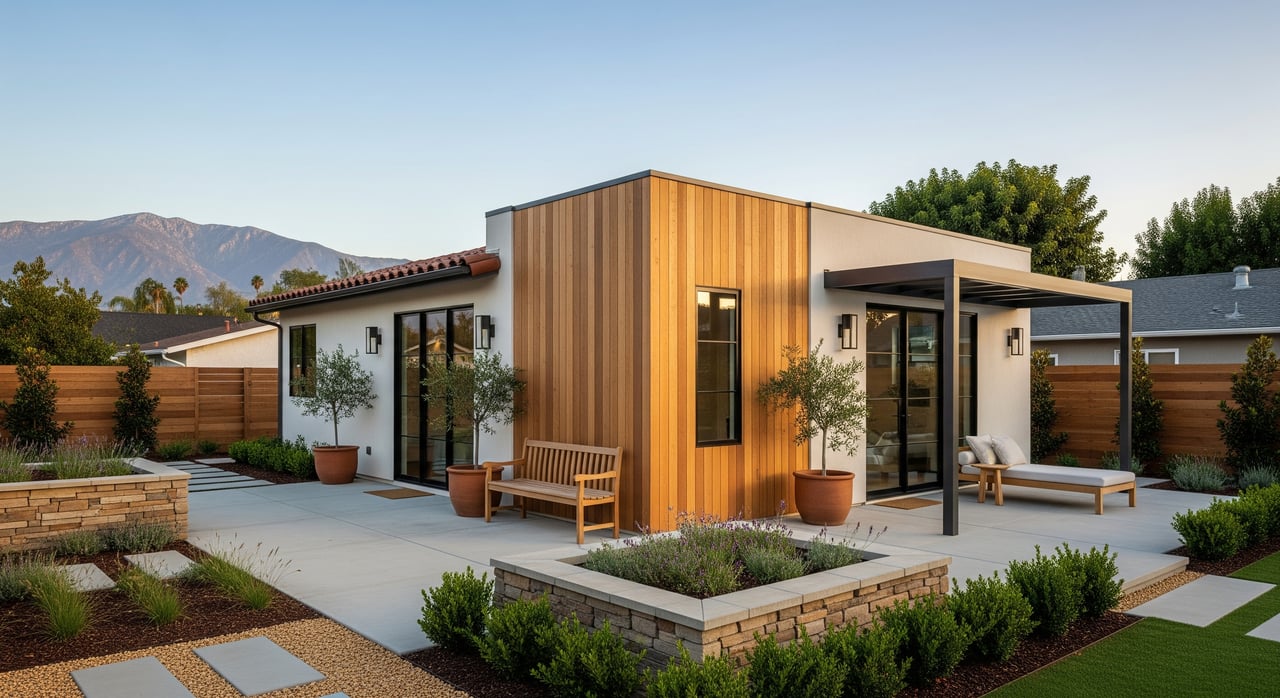
An accessory dwelling unit is a secondary, independent home on the same lot as your primary residence. It can be attached to the main house, detached in your yard, or created by converting existing space.
Common formats include:
- Detached backyard cottage
- Attached addition with its own entrance
- Garage conversion
- Interior conversion such as a studio within the existing house
You may also hear “Junior ADU” (JADU). A JADU is typically a smaller unit created within the main home, often up to about 500 square feet, and may share some systems.
Why ADUs make sense in Upland
- Add flexible space for multigenerational living while keeping privacy for everyone.
- Create a long-term rental for steady income.
- Improve resale appeal with a separate, permitted unit.
- Use an existing garage or interior area more efficiently.
California encourages ADUs and limits many local barriers. Cities like Upland apply state rules within local zoning, design, and building standards. Always confirm current procedures with the city before you draw plans or hire a contractor.
How permitting works in Upland
Start with quick research
- Verify zoning and overlays for your parcel.
- Confirm lot dimensions, setbacks, and whether you are on public sewer.
- Check if your property sits in a hillside, floodplain, or historic area that adds steps.
Schedule a pre-application chat
A short call or meeting with the Planning Division can save time. Bring a simple site sketch and questions about design standards, parking, and whether your project will be processed ministerially.
Prepare your plans and documents
- Site plan showing property lines, buildings, proposed ADU, setbacks, and parking.
- Floor plans and elevations for the ADU.
- Structural, civil, and utility details as needed.
- Title 24 energy compliance forms.
- For conversions, include existing plans and photos.
Planning review and building plan check
Many ADUs that meet objective standards are processed ministerially without a public hearing. After planning review, submit to Building & Safety for structural, mechanical, electrical, plumbing, and energy plan check. You may also need to coordinate utility upgrades or new meters.
Fees and utility connections
Expect permit and plan-check fees, and possibly water, sewer, and electrical connection charges. State law allows some fee reductions for smaller ADUs, but many projects still include standard local fees. Ask the city to outline expected fees for your specific design.
Inspections and final sign-off
Inspections occur at key stages such as foundation, framing, and MEP rough-ins. You will need a final inspection and certificate of occupancy before anyone moves in or you list the unit for rent.
Typical timeline
- Pre-application and design: 2 to 8 weeks
- Planning review and plan check: 4 to 16+ weeks
- Construction: 3 to 9 months
- Total duration: about 3 to 12+ months
What an ADU costs in Southern California
Every site is different, but these planning ranges are useful:
- Interior conversion: roughly $20,000 to $80,000+
- Garage conversion: roughly $40,000 to $150,000+
- Detached new-build ADU (about 400 to 1,200 sq ft): roughly $100,000 to $400,000+
- High-end or hillside builds can exceed $400,000
Costs rise with new utility connections, sewer extensions, major grading, structural or seismic work, fire-hardening materials in higher-risk zones, and accessibility features. Local labor and material markets also affect pricing.
Permits, taxes, and insurance
- Permit and plan-check fees vary by scope.
- Water, sewer, and electric connections can be significant.
- Property taxes usually increase because the ADU adds assessed value. Contact the San Bernardino County Assessor for specifics.
- Notify your insurance carrier and discuss landlord coverage if you plan to rent.
Ways to finance an ADU
- Cash or private financing
- Home equity loan or HELOC
- Renovation or construction loan
- Select FHA or Fannie Mae programs that allow ADUs in some cases
- Occasional local or state initiatives. Check for current offerings before you rely on them.
Parking, lot layout, and site planning
Parking rules to confirm
California law limits when cities can require off-street parking for ADUs. In many scenarios, no new stall is required, such as near public transit or when on-street parking is available. Upland may still have rules on stall counts, tandem parking, or when a garage conversion triggers replacement parking, so confirm details with Planning.
Smart layout tips
- Setbacks and envelope: know your side, rear, and front-yard limits.
- Lot coverage and FAR: make sure the added square footage fits local caps.
- Privacy and orientation: place doors, windows, and outdoor areas thoughtfully.
- Access and safety: maintain clear driveway and emergency access.
- Utilities: locate the sewer lateral, water meter, and electrical panel early to avoid surprises.
- Trees and grading: protected trees and drainage patterns can change your design.
Upland-specific considerations
Much of Upland features flat suburban lots, which simplifies foundations and access. Foothill or sloped areas can require geotechnical review, drainage plans, and retaining walls. Most city areas connect to municipal sewer, but verify your setup before you finalize utility plans.
Rental strategies and rules
Common paths for Upland owners
- Long-term rental: monthly leases often provide predictable income and a simpler regulatory path.
- Family use: a separate unit for relatives offers independence with proximity.
- Short-term rental: nightly stays can generate higher revenue but often face stricter local rules.
Regulations to check before renting
- Short-term rentals often require registration, a business license, and transient occupancy tax collection. Some cities limit or prohibit STRs in ADUs or require owner occupancy. Confirm Upland’s current rules before you build around this strategy.
- Standard California landlord-tenant laws apply, including habitability, deposits, and eviction protections.
- Plan for parking and trash service so you maintain good neighbor relations.
Estimating rent
ADU rents vary by size, finishes, and location within the city. Look at current local listings for studios and 1-bedroom units to understand ranges. A conservative estimate is wise until you verify demand.
Your step-by-step action plan
- Clarify your goal: family use, long-term rental, or potential STR.
- Confirm zoning, setbacks, and utility access for your parcel.
- Schedule a pre-application call with Upland Planning to vet your concept.
- Get a property exhibit or plot plan to confirm lot lines and easements.
- Consult an architect and contractor with ADU experience in the Inland Empire.
- Build a realistic budget and financing plan with a 10 to 15 percent contingency.
- Decide on a rental strategy and learn local rules early.
- Submit plans for ministerial review and building plan check.
- Line up utilities and inspections, then complete construction and finalize your certificate of occupancy.
Local resources to bookmark
- Review city procedures and forms with the City of Upland.
- For state policy context and summaries, see the California Department of Housing and Community Development.
Building an ADU in Upland can be a practical way to add flexibility, support family, and grow long-term value. With a clear plan and local guidance, you can move from idea to approved plans with confidence. If you would like a second opinion on feasibility, rental strategy, or resale impact, connect with a local team that knows the Inland Empire market well. Reach out to Michael Mucino for a friendly, no-pressure conversation about your options.
FAQs
Can every Upland homeowner build an ADU?
- Most single-family parcels are eligible under state law, but local standards and site limits still apply. Confirm your parcel’s specifics with Upland Planning.
How long do ADU permits take in Upland?
- Ministerial projects can move in a few weeks to a few months. With construction, most ADUs take about 3 to 12+ months from concept to completion.
What is the typical cost of an ADU?
- Conversions are generally tens of thousands, while detached new builds often range from the low to mid hundreds of thousands. Site conditions and utilities drive costs.
Do I need to add a parking space for an ADU?
- State rules limit when cities can require new off-street parking, but local standards still matter. Confirm whether your project needs a stall or if reductions apply.
Can I rent my ADU short-term in Upland?
- Possibly, but many cities regulate STRs. Check Upland’s current rules for registration, taxes, and any restrictions on ADUs before you plan on nightly rentals.
Will my property taxes increase after building an ADU?
- Likely yes, since improvements add assessed value. Contact the county assessor to understand how your specific project will be treated.